Pool Resurfacing & Finishes in 47 Maple RdGeorge Town
Restore worn pool surfaces with durable finishes suited for Cayman heat, salt, and daily use.
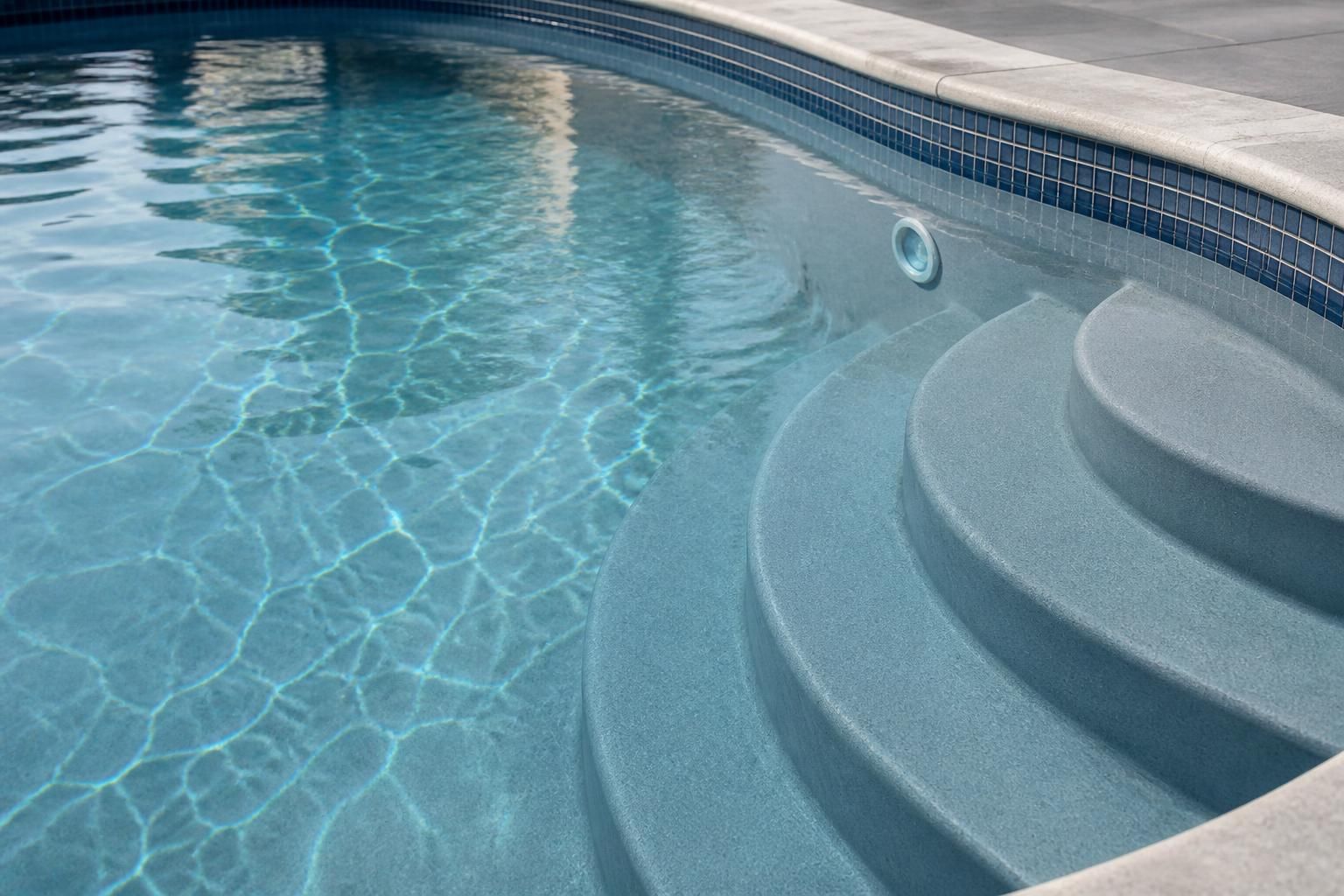
Restore worn pool surfaces with durable finishes suited for Cayman heat, salt, and daily use.
If your pool surface feels rough, looks faded, or shows stains, cracks, hollow spots, or exposed aggregate, the finish is already telling you something. Cayman sun, wet-season rainfall, coastal salt exposure, and constant water chemistry all wear on plaster, quartz, and pebble surfaces, especially where the shell meets tile, coping, and fittings.
Cayman Pool Builders at 47 Maple RdGeorge Town handles resurfacing and finishing work for residential pools, villa pools, condo pools, hotel pools, and commercial basins across Grand Cayman. We evaluate the shell, prepare the substrate, rebuild the finish system, and coordinate the surface, tile, coping, and waterline details so the pool looks refined and stands up to local conditions.
Not every finish problem starts with a visible crack. Some surfaces start with color loss, then a chalky feel, then small rough patches that collect scale and debris. Once water chemistry, sunlight, and circulation patterns begin to affect the interior finish, the pool can feel older long before the shell itself is damaged.
Common signs that point toward resurfacing or finish renewal include:
In George Town and around Seven Mile Beach, South Sound, West Bay, and Camana Bay, many pools also see heavy use from vacation rental cycles and resort turnover, which makes finish condition more noticeable and more important to overall presentation.
Different pools call for different surface systems. The right finish depends on the existing shell, how the pool is used, how much sun it gets, and whether the owner wants a refined residential look or a more durable commercial-grade interior.
White plaster gives a classic appearance and a smooth interior, but it is more sensitive to water balance and wear. Quartz finishes add harder aggregate for improved color depth and surface life. Pebble aggregate finishes, including polished textures, are often selected where owners want a more robust interior that can handle long service cycles, strong sun exposure, and regular cleaning.
Resurfacing often pairs well with updated waterline tile, mosaics, and coping. A new finish can look incomplete if the tile band is stained or if the coping edge no longer aligns with the pool’s visual style. Coral stone, travertine, porcelain pavers, and slip-resistant deck transitions can be coordinated so the entire edge detail feels intentional.
Pool finish color changes water appearance. Light finishes create a bright, clear look, while darker tones can deepen the water color and reduce glare. Texture also matters. Families, villa guests, and commercial users often prefer a surface that balances comfort with durability, especially around tanning ledges, beach entries, submerged stools, and steps.
Before any new finish is placed, we inspect the shell and prepare the pool so the surface bond is dependable. That means checking for cracks, delamination, weak areas, fittings, penetrations, and prior patch work that may interfere with the new coat.
We remove failing finish layers where needed and open up problem spots so the new system can bond to sound concrete.
We address shell defects, step edges, returns, skimmers, light niches, and other penetrations before finishing begins.
Depending on the pool, we install plaster, quartz, or pebble-based finishes with attention to mix consistency, placement, and trowel work.
We coordinate the interior finish with tile, coping, and deck edges so the pool reads as one complete surface system.
That sequence matters for pools with gunite or shotcrete shells, especially where rebar, bond beams, hydrostatic pressure, groundwater, or limestone subgrade conditions have influenced the original construction. A finish is only as sound as the shell behind it.
Pool finishes are shaped by water chemistry from the first day after startup. If the balance is off, even a strong interior can lose its appearance early. We keep the finish side of the work connected to the hydraulic and sanitation side so the pool is easier to care for after resurfacing.
Key water-quality factors that affect new surfaces include free chlorine, combined chlorine, pH, total alkalinity, calcium hardness, cyanuric acid, TDS, and salinity for saltwater systems. High acidity can etch plaster. Low calcium can pull minerals from the surface. Excessive stabilizer can make sanitation harder to manage. Salt cells and chlorine generators also need circulation and return patterns that support even distribution, not harsh localized exposure.
For George Town pools exposed to strong UV, evaporation, and wet-season dilution, finish care must account for how fast chemistry can shift after rain, splash-out, or refilling. Balanced water helps protect the new surface, the grout, the tile band, and the metal fixtures around the pool.
Some pools only need a targeted surface refresh. Others need a more complete restoration because the interior, tile line, and coping have aged together. Cayman Pool Builders evaluates the visible finish along with the shell condition, circulation layout, and equipment setup before recommending the scope of work.
We commonly address:
Pool resurfacing often becomes the right moment to review hydraulics as well. If returns, skimmers, suction outlets, or pump selection are forcing uneven circulation, the new finish may age unevenly. A surface upgrade works better when the circulation pattern supports steady turnover, balanced flow, and cleaner water across the entire basin.
Residential pools, condominium basins, hotel pools, resort pools, and commercial installations all place different demands on a finish. A private villa pool may prioritize comfort underfoot and a refined water color. A hotel or resort pool may need a stronger aggregate finish, more durable edges, and details that hold up under repeated cleaning and daily use.
For infinity pools, vanishing-edge basins, and perimeter-overflow designs, the finish must align tightly with overflow details, gutters, balance tanks, and visible edge lines. For raised spas, waterfalls, and water features, we consider splash zones, mineral buildup, and how the finish will read next to tile, coping, and lighting. On beach entries and tanning ledges, we pay close attention to texture because those zones get the most foot traffic and the most direct sun.
Across Bodden Town, North Side, Rum Point and Cayman Kai, East End, Prospect, and Savannah, the pool finish needs to work with the site, not against it. Coastal salt exposure, wind-driven debris, and limestone conditions all influence how the final interior should be built and maintained.
Every resurfacing project moves through a practical sequence so the finished pool is ready for real use, not just photos. At 47 Maple RdGeorge Town, we coordinate the work from inspection through final fill and startup guidance.
We begin by examining the shell, finish condition, tile line, coping, fittings, and equipment room components that affect the pool’s overall finish performance. If the pool has automation, heaters, chillers, variable-speed pumps, or filtration upgrades, we account for those during planning.
The new finish is placed with attention to thickness, coverage, and transitions. Tile, coping, mosaics, and deck edges are checked together so the finished pool has consistent lines and durable contact points.
After filling, the water must be balanced carefully so the new surface cures correctly. We explain the early care steps, brushing schedule, and the circulation settings that help protect the finish during the first critical period.
If the surface feels abrasive, shows widespread staining, has visible cracking, or no longer responds to cleaning and water balancing, resurfacing may be the practical next step.
Yes. We can align the finish with the pool’s shape, waterline tile, coping, and surrounding deck materials so the result suits the property and the way the pool is used.
It does, but the finish choice and startup care must account for salinity, salt cells, circulation, and ongoing chemical balance so the new surface is not stressed early.
Minor defects may sometimes be repaired without a full resurface, but deep etching, delamination, or widespread wear usually point toward a more complete finish renewal.
Yes. Finish color, texture, and aggregate type all influence water tone, brightness, and how light reflects off the surface.
Yes. We provide resurfacing and finishes for commercial, hotel, and resort pools where durability, appearance, and user comfort all matter at the same time.
If your pool surface is showing wear, roughness, or cosmetic decline, Cayman Pool Builders can evaluate the shell and recommend a finish that suits Cayman conditions and your property type. From George Town to Seven Mile Beach, West Bay, South Sound, and beyond, we help restore the interior surface so the pool looks sharp and stands up to daily use.
Contact us at [email protected] or +16477005472 to discuss resurfacing options for your pool at 47 Maple RdGeorge Town.

Start Your Project
Tell us what you want to build or improve, and we will help you choose the right design, construction, or service direction.