Gunite & Concrete Pools in 47 Maple RdGeorge Town
Custom gunite and concrete pools shaped for Cayman lots, luxury features, and lasting structure.
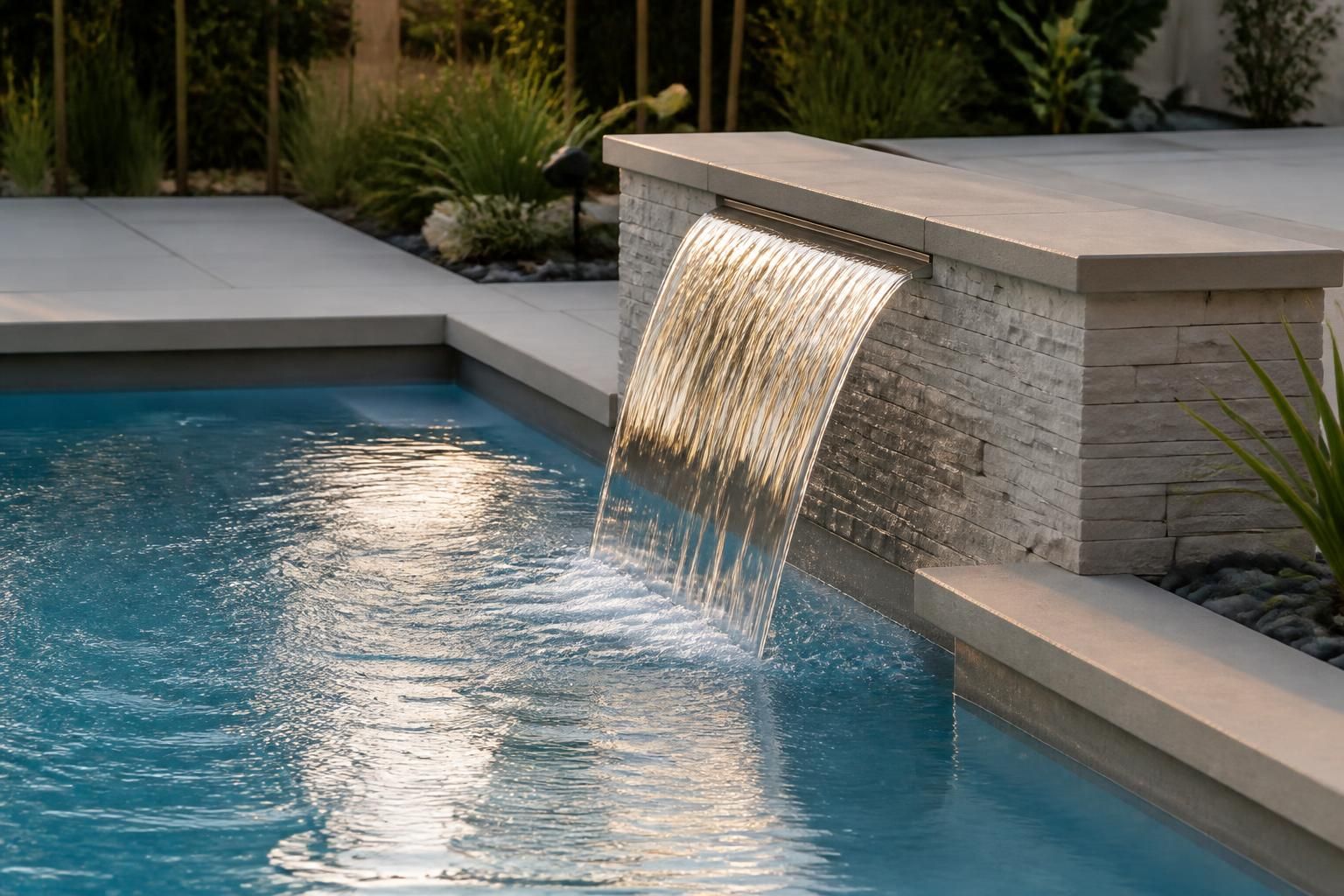
Custom gunite and concrete pools shaped for Cayman lots, luxury features, and lasting structure.
Cracked shell lines, rough plaster, shifting coping, or a pool shape that never matched the property can all point to a build that was not designed for Cayman conditions. If your current pool feels dated, leaks around penetrations, or struggles with circulation after heavy use and rainfall, a gunite or concrete rebuild may be the right next step.
At Cayman Pool Builders, we plan and build reinforced concrete pools from 47 Maple RdGeorge Town for villas, residential estates, condominiums, hotels, resorts, and commercial properties across Grand Cayman. We shape each project around site conditions, hydraulic demand, finishes, and the way the pool will actually be used, from quiet courtyard layouts to statement pools with waterfalls, tanning ledges, and raised spas.
Gunite and concrete pools are a strong fit for limestone ground, waterfront exposure, and properties that need a custom layout rather than a fixed shell size. A concrete pool lets us adapt the design to grade changes, access limits, retaining conditions, and the way the surrounding deck, structure, and view lines come together. On coastal properties, we also account for salt exposure, wind-driven debris, evaporation, and the extra wear that tropical sun places on surfaces and equipment.
Every build starts with site assessment and layout planning. That means reviewing excavation limits, subgrade conditions, compaction, drainage paths, groundwater behavior, and how the pool shell will sit against the surrounding construction. For larger properties and commercial settings, we also plan for access, equipment-room placement, and the turnover needs of the intended bather load.
A concrete pool is only as good as the design behind it. We begin with how the pool should feel: lap-friendly, social, resort-style, reflective, or dramatic. From there, we balance depth, circulation, entry points, coping choices, and features such as swim-up bars, submerged stools and seating, beach entries, water walls, LED lighting, and raised spas. The goal is a layout that looks refined while still supporting clean hydraulics and straightforward upkeep.
Custom pool design also means matching the shell to the site. Narrow side yards, setback limits, elevation shifts, and open waterfront views all affect the final form. For infinity and vanishing-edge concepts, the edge detail, catch basin, and return hydraulics are planned together so the water sheet reads correctly and the system can handle changing load.
Gunite and shotcrete construction create a reinforced concrete shell that can be formed to the site instead of forcing the site to fit a prefabricated shape. We build the structure with excavated lines, compacted base preparation, rebar reinforcing, bond beams, and shell thickness suited to the design. Around limestone conditions and varying subgrade, reinforcement detail matters because the pool must resist movement, settlement, and hydrostatic pressure.
The shell is sprayed and shaped, then allowed to cure before waterproofing, penetrations, tile work, coping, and finish surfaces are installed. That sequence matters. Pipe sleeves, drains, returns, lights, skimmers, and feature lines need clean alignment before the shell is closed up. Careful placement reduces stress at fittings and helps the pool perform under daily circulation and seasonal rain loading.
The interior and edge details shape how the pool looks and how it wears over time. We install plaster, quartz aggregate, pebble aggregate, Diamond Brite style finishes, and waterline tile selected for the site and the way the pool will be used. For coping and deck transitions, options such as coral stone, travertine, porcelain pavers, and slip-resistant decking help the pool read as part of the property instead of a separate object.
Finish choice also affects maintenance. Smoother surfaces may feel softer underfoot, while aggregate finishes can offer more texture and stain resistance. Tile and mosaic bands help protect the waterline from staining and give the pool a crisp visual edge. On high-exposure properties, finish color and material selection should work with sunlight, salt air, and the amount of splash-out expected from swimmers and water features.
Concrete pools require more than a strong shell. They need a hydraulic design that matches pool volume, turnover rate, design flow, pipe sizing, total dynamic head, pump curve, and filtration capacity. If those parts are mismatched, the pool may skim poorly, strain equipment, or leave dead zones where debris collects. We plan the circulation path as a full system from suction to return, not as isolated parts.
That includes skimmers, suction outlets and main drains, return inlets, valves, variable-speed pumps, cartridge, sand, or DE filters, and where needed, surge or balance tanks. We also plan heaters, chillers, flow meters, and equipment-room layout so maintenance access stays clear and the circulation path can be tuned for the pool’s real demand. For pools with saltwater systems, salt cells and electrolysis output are coordinated with the hydraulic setup and the chosen sanitizer.
Concrete construction makes it possible to integrate features that feel built into the architecture of the property. Swim-up bars, submerged stools, tanning ledges, beach entries, raised spas, waterfalls, and water features can all be shaped into the shell instead of added later as separate pieces. LED lighting can be placed to support evening use, highlight steps and edges, and bring out tile and finish textures after dark.
These elements need planning from the start because they affect both structure and hydraulics. A raised spa changes circulation and spillway design. A beach entry changes slope, finish selection, and cleaning patterns. A waterfall or water wall changes return flow and equipment demand. When the feature set is planned early, the pool looks intentional and is easier to live with.
If an older concrete pool has staining, surface wear, tile failure, or an outdated layout, renovation can change the feel of the entire property without starting from zero. Pool renovation and remodeling can include reworking steps, enlarging ledges, adjusting depths, replacing coping, refreshing the waterline, or updating the equipment set. Resurfacing gives the shell a new interior layer and is often paired with finish upgrades to improve appearance and texture.
We also handle pool equipment repair and upgrades when the shell is sound but circulation or controls are falling behind current needs. That can include updated automation, new variable-speed pumping, improved filtration, saltwater conversion, or changes to heaters and sanitation controls. On coastal and hospitality sites, these updates often make daily operation smoother and easier to monitor.
A concrete pool stays clearer and more comfortable when water chemistry and cleaning are managed around Cayman conditions. Tropical heat, UV exposure, and rainfall change chlorine demand and can push pH and alkalinity out of range faster than many owners expect. We account for free chlorine, combined chlorine, pH, total alkalinity, calcium hardness, cyanuric acid, TDS, salinity, ORP, and sanitizer output when planning maintenance and service visits.
Routine care may include brushing, vacuuming, cleaning skimmers, checking filters, balancing sodium or calcium hypochlorite additions where applicable, and inspecting salt cells, chlorine generators, algaecide use, clarifier, and robotic, suction, or pressure cleaners. The goal is clear water, stable surfaces, and equipment that is not forced to compensate for chemistry drift.
Gunite and concrete pool work also needs to line up with Cayman Islands Government requirements, including Department of Planning review, Department of Environmental Health involvement where applicable, Development and Planning Act procedures, Building Code Regulations, and Cayman building-code requirements. For new builds and major remodels, that often means structural, mechanical, and electrical plans, along with inspections tied to the approved scope.
We design with barriers, gates, anti-entrapment suction outlets, bonding, grounding, and electrical coordination in mind from the start. The International Swimming Pool and Spa Code is a useful reference point for safety and construction detail, especially where pool access, suction safety, and circulation hardware are part of the permit set. For owners, that means fewer surprises during approval and a build that is easier to move through the process.
We design the shell, excavation, compaction, and reinforcement around the site conditions so the pool can sit securely and resist movement from subgrade variation and groundwater pressure.
Yes. Concrete construction is one of the most flexible ways to fit a pool to setback limits, access constraints, and unusual lot geometry while still keeping room for circulation and deck space.
Plaster, quartz, pebble aggregate, Diamond Brite style finishes, and waterline tile are all common choices, along with coping and deck materials such as coral stone, travertine, and porcelain pavers.
Yes. Raised spas, spillways, waterfalls, water walls, tanning ledges, swim-up bars, and submerged seating can be built into the shell and tied into the circulation design.
Because the shell is only one part of the system. Pool volume, turnover rate, pipe sizing, pump selection, filtration, and return placement all affect clarity, energy use, and how well the pool handles daily use.
Yes. We can resurface worn interiors, update tile and coping, revise the layout, and pair the shell work with equipment upgrades or automation changes when the existing pool needs a broader refresh.
Cayman Pool Builders works from 47 Maple RdGeorge Town and serves properties across George Town, Seven Mile Beach, West Bay, Bodden Town, South Sound, Camana Bay, Savannah, Prospect, North Side, Rum Point & Cayman Kai, and East End. Whether the project is a quiet residential pool or a larger hospitality feature, we build with the same attention to structure, circulation, finish detail, and the way the pool will be used day after day.

Start Your Project
Tell us what you want to build or improve, and we will help you choose the right design, construction, or service direction.