Pool Hydraulic Design & Filtration Systems in 47 Maple RdGeorge Town
Balanced hydraulics and filtration for clear water, steady circulation, and dependable pool performance.
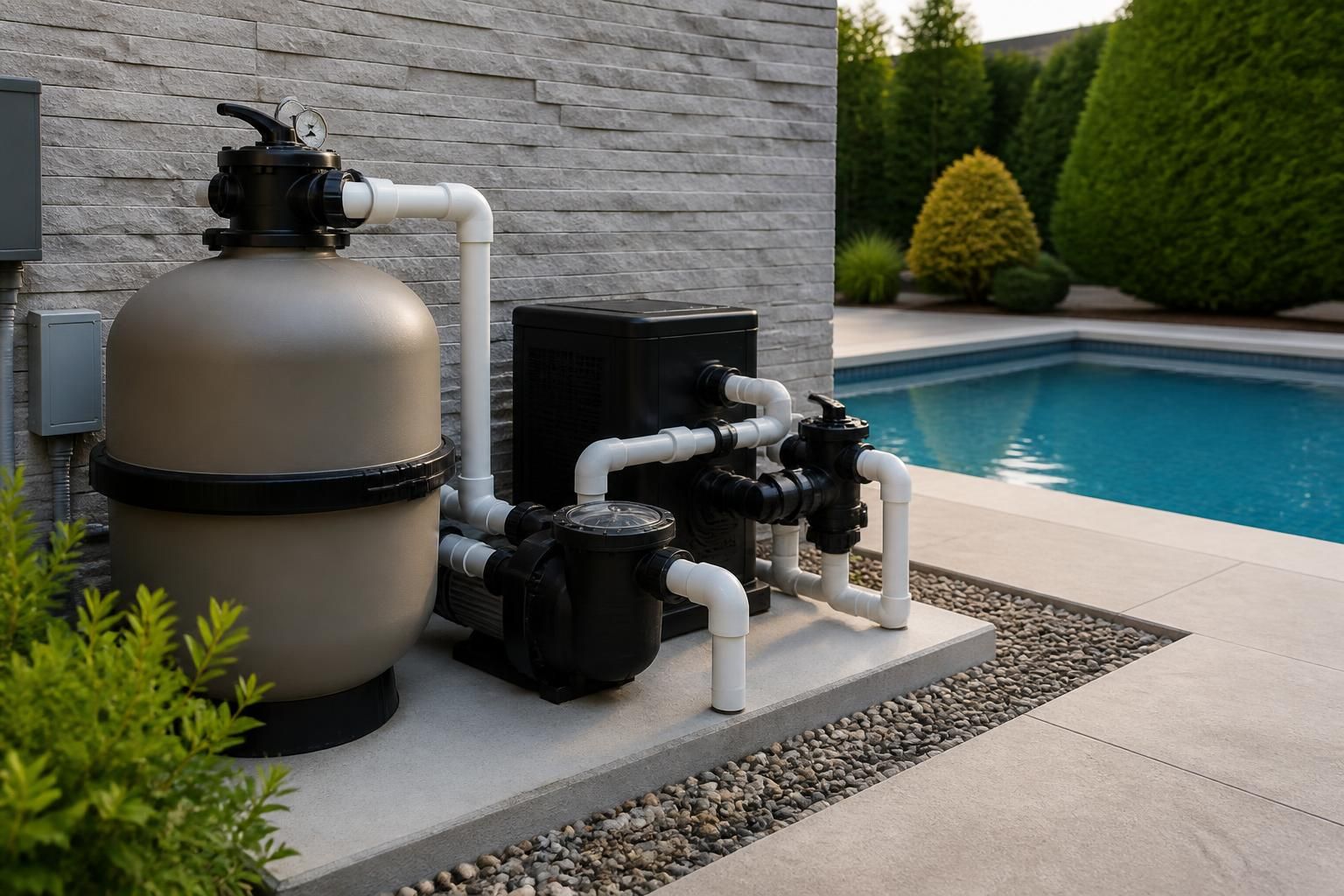
Balanced hydraulics and filtration for clear water, steady circulation, and dependable pool performance.
Cloudy water, weak return jets, noisy equipment, and debris that keeps circling back usually point to a hydraulic design that is not matched to the pool. At Cayman Pool Builders, we look at the whole circulation path at 47 Maple RdGeorge Town, from skimmers and drains to the pump, filter, heaters, valves, and returns, so the water can move the way the pool was intended to operate.
Grand Cayman conditions add another layer: strong sun, heavy rainfall during the wet season, wind-driven debris, coastal salt exposure, and limestone subgrade can all affect how a pool takes water, sends it through filtration, and returns it to the basin. We design and refine pool hydraulic design & filtration systems for residential, villa, condominium, hotel, resort, and commercial pools across George Town and the surrounding districts, with a focus on circulation, turnover, head loss, and water quality that holds up under local use.
Hydraulic design starts with the pool volume, because volume sets the turnover target and helps determine the design flow needed for the system. From there, we calculate how water should travel through suction outlets, skimmers, balance or surge tanks where applicable, filtration, sanitization, heating or chilling equipment, and return circulation. Every pipe run, valve, fitting, and elevation change affects total dynamic head, which then drives pump selection.
When the design is off, the symptoms are easy to spot. The skimmers may not pull surface debris well, the returns may feel uneven, and the filter may trap dirt too slowly or too quickly. In some pools, the pump is oversized for the plumbing and creates high velocity, noise, and wasted energy. In others, the pump curve never matches the real head loss, so the system never reaches the circulation rate the pool needs.
Filtration is where fine particles, oils, dust, and wind-blown debris are removed from the water before they can build up. The right filter depends on pool use, bather load, desired water clarity, and available space in the equipment room. We set up and service cartridge, sand, and DE filtration systems, then size the vessel so the filter rate aligns with the design flow rather than forcing the pump to push beyond the filter’s comfortable range.
For larger pools, hotel pools, and resort pools, filtration must handle frequent circulation and changing occupancy. For homes along Seven Mile Beach, South Sound, or West Bay, salt exposure and constant use can make careful filtration even more important. We look at the entire chain: suction, pump, filter, sanitization, and return circulation. If one part is undersized, the rest of the system carries the strain.
Water only moves well when the pump curve and the plumbing curve meet at the right operating point. That means we do not choose a pump by horsepower alone. We look at total dynamic head, the number of fittings, the length of each pipe run, equipment elevation, and how features like waterfalls, swim-up bars, raised spas, or water features change demand. Variable-speed pumps are often a strong fit because they allow circulation to be tuned to the pool’s real needs instead of forcing full-speed operation all day.
On many Cayman projects, a pool that appears simple on paper becomes hydraulically complex once you add a spa spillway, perimeter overflow, or multiple feature returns. A careful design keeps suction outlets safe, improves skimmer performance, and keeps water moving with less turbulence and less wear on the equipment. For existing pools, we can assess where the current setup is losing efficiency and recommend equipment upgrades that align pump output, filtration rate, and circulation pattern.
Saltwater pools rely on correct circulation just as much as chemistry. A chlorine generator or salt cell only works well when the water passes through the cell at the intended flow rate, with enough run time and stable salinity for consistent output. If the hydraulics are unbalanced, the cell can underperform, the skimmer capture can weaken, and water quality can drift even when the pool looks clean at the surface.
We design saltwater systems with attention to return placement, pump sizing, and equipment protection from coastal corrosion. Around Cayman waterfront properties and commercial pools near the shore, metal fixtures, heaters, sensors, and electrical components need careful placement and compatible materials. We also consider how salinity, heat, and evaporation interact so the system stays easier to manage during long sunny periods.
Commercial pools, hotel pools, and resort pools need hydraulic systems that handle higher bather loads, longer operating periods, and more demanding water clarity targets. At properties across Camana Bay, George Town, Seven Mile Beach, and the wider Grand Cayman market, that often means larger filtration capacity, more deliberate return spacing, stronger circulation paths, and equipment rooms laid out for fast access to pumps, filters, valves, heaters, and controls.
For hospitality properties, we also account for surge or balance tanks where required by the pool type, as well as circulation patterns that support consistent skimming of surface oils, sunscreen, and floating debris. We can work on new builds and renovation work where the goal is to improve hydraulics without changing the character of the pool deck, coping, or feature set.
Filtration and sanitation work together. Clear water starts with circulation, then continues with chemical balance and sanitation output that matches use and sun exposure. In Cayman’s tropical heat and UV, free chlorine can be consumed quickly, especially in busy pools. We pay attention to pH, total alkalinity, calcium hardness, cyanuric acid, TDS, and salinity, because each one influences how the water feels, how surfaces wear, and how effectively chlorine or salt-generated sanitizer performs.
We also service water management components tied to automation, including chlorine generators, ORP-related control strategies where applicable, and equipment settings that help the pool recover after rain or heavy use. Common treatment tools include sodium hypochlorite, calcium hypochlorite, algaecide, clarifier, brushing, vacuuming, and the use of robotic, suction, or pressure cleaners when appropriate for the system and finish.
Older pools often show hydraulic symptoms long before the equipment fails outright. Return jets may no longer reach across the basin, the filter may need cleaning too often, or the pump may have been replaced without regard to the original pipe sizing. During renovation and remodeling work, we can revise circulation layout, replace worn valves, improve filtration capacity, and update control systems so the pool works better with the shell and finishes already on site.
These upgrades matter for resurfacing projects too. A new plaster, quartz, pebble aggregate, Diamond Brite finish, waterline tile, or coping like coral stone, travertine, or porcelain pavers deserves circulation that keeps debris from settling and stain-prone areas from sitting stagnant. If the pool also includes a tanning ledge, submerged seating, raised spa, waterfall, or lighting package, the hydraulic plan needs to support those features without weakening the main circulation pattern.
At 47 Maple RdGeorge Town, Cayman Pool Builders supports pool hydraulic design & filtration systems for homes, villas, condominiums, hotels, resorts, and commercial properties across George Town, South Sound, Camana Bay, Seven Mile Beach, West Bay, Bodden Town, Savannah, Prospect, North Side, Rum Point & Cayman Kai, and East End. Each area can present different site conditions, from waterfront exposure to limestone subgrade and groundwater considerations, so the design has to fit the property rather than forcing a one-size approach.
When we review a project, we look at the practical path water takes through the pool and equipment room. That includes skimmers, suction outlets or main drains, return lines, valves, heaters or chillers, automation panels, and any specialty features tied into the circulation loop. The goal is simple: water should move cleanly, filter efficiently, and reach every zone of the pool without dead spots.
Signs often include weak skimming, uneven return pressure, cloudy water that keeps returning after cleaning, noisy equipment, or areas of the pool where debris settles again and again.
Pump size has to match the real head loss of the plumbing system. If the pump curve does not align with the system curve, circulation and filtration suffer, and the equipment can work harder than needed.
Yes. A salt system creates sanitizer, but the water still needs balanced circulation, solid filtration, and correct run time so the chlorine reaches every part of the pool.
Often, yes. Many pools can benefit from better valve balance, upgraded filtration, a new variable-speed pump, revised return placement, or more efficient equipment controls.
Skimmers remove surface debris, while suction outlets or main drains support circulation from lower areas of the pool. Together they help the pump draw water evenly through the system.
Testing should be regular enough to track chlorine, pH, alkalinity, calcium hardness, CYA, and salinity changes, especially during hot weather, heavy use, or after rainfall.
If your pool needs clearer water, stronger circulation, or a smarter equipment layout, Cayman Pool Builders can review the hydraulic and filtration side of the system and build a plan that suits the property and the way the pool is used. Whether the project is a new custom pool, a commercial basin, or a renovation at 47 Maple RdGeorge Town, the right hydraulic design gives the rest of the pool a solid foundation.
Call +16477005472 or email [email protected] to discuss the pool, the equipment room, and the circulation goals for your site.

Start Your Project
Tell us what you want to build or improve, and we will help you choose the right design, construction, or service direction.