Hotel & Resort Pools in 47 Maple RdGeorge Town
Luxury hotel and resort pools designed for guest comfort, resilience, circulation, and Cayman conditions.
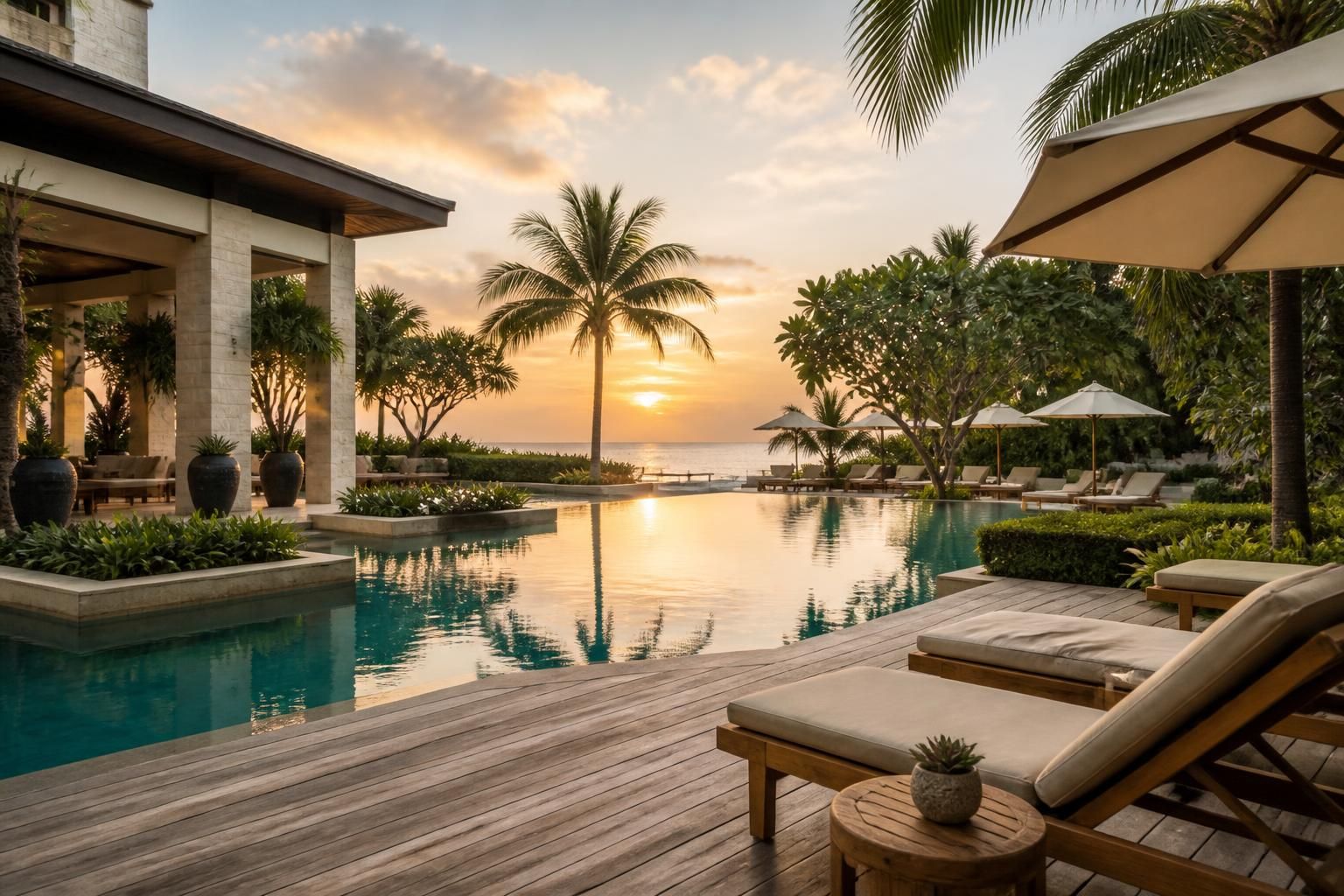
Luxury hotel and resort pools designed for guest comfort, resilience, circulation, and Cayman conditions.
When a hotel or resort pool starts showing cloudy water, weak circulation, tired finishes, or stressed equipment, guests notice fast. At a property near 47 Maple RdGeorge Town, those signs can affect how the pool looks, how it feels, and how smoothly the entire aquatic area operates through peak use.
Cayman Pool Builders handles hotel and resort pools with a focus on guest-facing performance, shell durability, water movement, and equipment that can stand up to tropical heat, UV exposure, wet-season rainfall, coastal salt air, and heavy daily use. We plan every pool around the way guests move, relax, and return to the water, from first sketch to renovation, resurfacing, automation upgrades, and ongoing maintenance.
Hotel and resort pools need to do more than hold water. They need to support circulation paths, quiet lounging zones, easy entry points, and strong visual appeal from suites, decks, bars, terraces, and dining areas. Cayman Pool Builders designs aquatic spaces around the guest experience, then builds the structure, finishes, and mechanical system to match the load those spaces will carry.
For Cayman properties, design must account for limestone conditions, groundwater, wind-driven debris, and waterfront exposure. That starts with site assessment, then continues through excavation planning, subgrade preparation, compaction, formwork, and reinforcing steel placement. The shell, bond beams, and penetrations are detailed to work with the site rather than against it.
Resort pools often need features that shape the atmosphere as much as the water itself. These details can be integrated into new construction or selected remodels:
Hotel and resort pools often see more load, more circulation hours, and more surface wear than private residential pools. That is why reinforced-concrete construction matters. Gunite and shotcrete shells are shaped to hold the geometry, reinforce spans, and support architectural features such as steps, ledges, spas, and overflow edges.
Construction also has to respect Cayman site conditions. Groundwater and hydrostatic pressure can affect excavation and shell design, especially near coastal and waterfront properties. We evaluate these conditions before layout, then build the structure with rebar, bond beams, curing discipline, waterproofing, and careful treatment of all penetrations, drains, returns, skimmers, and wall fittings.
For hotel and resort pools, structural quality is not a backdrop, it is the base of the entire experience. Typical build elements may include:
Infinity, vanishing-edge, and perimeter-overflow pools are popular at resort properties because they create a visual connection to the sea, skyline, or courtyard setting. These systems are not just decorative. They depend on balance between water level, catch basins, surge capacity, and hydraulic control.
At a hotel site, overflow pools must be sized and tuned around guest load, bather activity, and wind exposure. We consider how water leaves the basin, how it returns, and how the balance tank or surge system responds when the pool fills with swimmers. The goal is steady edge behavior, stable water level, and circulation that does not create dead spots at the perimeter or shallow end.
These pools rely on more than the visible edge. Important elements include:
A resort pool should be designed from volume outward: pool volume determines turnover target, turnover target determines design flow, design flow shapes pipe sizing and head loss, and head loss feeds total dynamic head and pump selection. Once the pump curve is matched to the system, filtration and sanitization can do their work without strain.
That relationship matters across skimmers, suction outlets and main drains, returns, valves, variable-speed pumps, cartridge, sand, or DE filters, heaters, chillers, and the equipment room. A pool that looks calm on the surface can still have poor circulation if hydraulics were not planned for its shape, depth, and guest demand.
Hotel and resort equipment rooms need access, service clearance, and a layout that supports routine cleaning and adjustment. We often coordinate:
Resort pools live or die by first impressions. Cloudy water can be corrected, but worn plaster, stained tile, rough coping, and tired deck finishes change the feel of the entire property. Cayman Pool Builders renovates shells and updates finishes with materials suited to tropical sun, repeated use, and coastal exposure.
Interior finish options can include plaster, quartz, pebble aggregate, and Diamond Brite, paired with waterline tile and mosaics that hold up to constant splash, chemical exposure, and sun. Around the pool, coping and deck finishes may include coral stone, travertine, porcelain pavers, and slip-resistant decking so the space feels refined without becoming slick or hard to manage.
Many hotel and resort pools start showing the same wear patterns before a remodel is needed:
Commercial and hospitality pools require water chemistry that responds to guest load, rainfall, heat, and sun. Free chlorine, combined chlorine, pH, total alkalinity, calcium hardness, cyanuric acid, TDS, salinity, and ORP all affect how the water looks, feels, and holds sanitizer. In saltwater systems, the salt cell and electrolysis output also need regular attention.
We handle maintenance and cleaning with a focus on brushing, vacuuming, skimming, water testing, clarifier, algaecide when needed, and equipment checks that keep the water ready for guests. Cayman conditions can shorten the distance between clean water and off-balance water, especially when UV, evaporation, and wet-season rainfall change the chemistry quickly.
Depending on the pool and the schedule, service may involve:
Hotel and resort pools often stay in service while changes are made around them, so repairs and upgrades need planning and coordination. We handle equipment repair, automation upgrades, and system improvements that can refresh the guest experience without forcing unnecessary rebuilds.
That may include updating pumps, filters, valves, controls, lighting, or sanitization equipment, as well as adjusting hydraulics so water reaches each part of the basin evenly. If a property is preparing for a renovation, we can review the current shell, deck, finish, and equipment room together so the next phase fits the site and the operating goals.
Common triggers for a resort pool upgrade include:
Hotel and resort pool work at 47 Maple RdGeorge Town may need coordination with the Cayman Islands Government, Department of Planning, Department of Environmental Health, and the requirements tied to the Development and Planning Act, Building Code Regulations, and Cayman building-code requirements. Depending on the scope, planning and building approval can involve structural, mechanical, and electrical plans, plus inspections during the build.
Pool barriers, gates, anti-entrapment suction outlets, bonding, grounding, and electrical details must be handled with the same care as the visible design. International Swimming Pool and Spa Code concepts often matter here because guest safety, circulation design, and access control all intersect at hotel and resort properties.
We start with the pool volume, then work through turnover target, design flow, pipe sizing, head loss, total dynamic head, and pump curve matching before choosing the filtration and circulation layout.
Yes. Those features can be built into new construction or planned as part of a remodel, with attention to circulation, seating depth, penetrations, and finish detailing.
Plaster, quartz aggregate, pebble aggregate, and Diamond Brite are common interior options, while waterline tile, mosaics, coral stone, travertine, porcelain pavers, and slip-resistant decking are often used for visual impact and durability.
They can, provided the cell output, salinity, equipment selection, and water chemistry are matched to the pool size, guest load, and coastal exposure.
Yes. Many renovations focus on resurfacing, tile, coping, deck updates, equipment upgrades, or hydraulic adjustments while keeping the main shell and layout.
Yes. We serve George Town, Seven Mile Beach, West Bay, Bodden Town, South Sound, Camana Bay, Savannah, Prospect, North Side, Rum Point and Cayman Kai, and East End.
For hotel and resort pools near 47 Maple RdGeorge Town, Cayman Pool Builders can help shape a water feature that fits the property, the climate, and the demands of guest use. Whether the work involves a new build, an overflow design, a remodel, resurfacing, cleaning, equipment repair, or system upgrades, the goal is the same: a pool that looks inviting and performs under Cayman conditions.
Reach out by email at [email protected] or call +16477005472 to discuss your site, your schedule, and the pool experience you want to create.

Start Your Project
Tell us what you want to build or improve, and we will help you choose the right design, construction, or service direction.